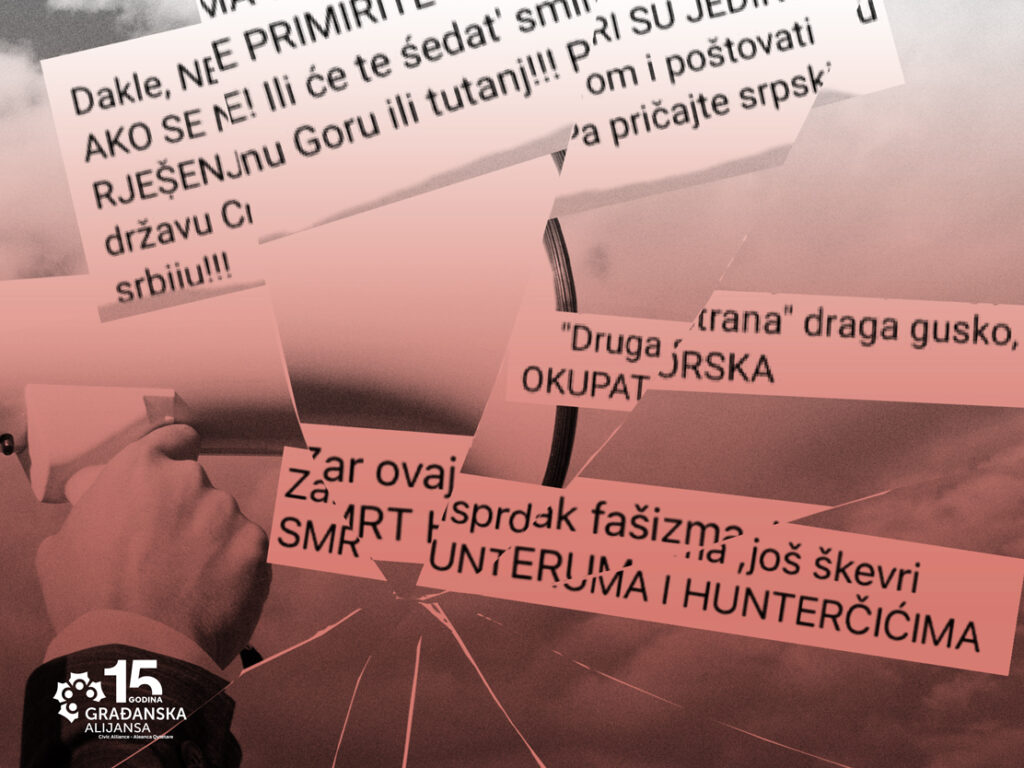
The Civic Alliance points to a concerning trend of increasingly frequent hate speech based on national affiliation, threats, and the incitement of religious and ethnic intolerance in public discourse, particularly in the online space. Numerous examples witnessed over the past ten days, directed at individuals from different political entities, further confirm the seriousness and widespread nature of this problem.
Such messages are part of a troubling pattern of hate speech in the public sphere and serve as a reminder of the divisions and traumas of the past that society is still in the process of overcoming. They also constitute a gross violation of fundamental democratic standards and stand in contradiction to the values of interculturalism, mutual respect, and tolerance to which Montenegro aspires.
The unresolved legacy of the 1990s and the absence of a full institutional resolution for many events from that period clearly indicate that this burden continues to weigh on society and leaves room for the resurgence of such rhetoric.
It is important to emphasize that any disagreement, criticism, or misunderstanding in the public sphere represents a legitimate part of democratic dialogue. However, under no circumstances should it turn into threats, insults, or other forms of violence. The fact that someone’s work is public and subject to criticism cannot and must not be used as justification for exposure to threats, pressure, and attacks.
The normalization of such behavior represents a serious social challenge that further deepens divisions and fuels polarization. Therefore, it is of essential importance that such cases receive a clear, consistent, and institutionally grounded response.
We expect that the announced amendments to the Criminal Procedure Code will improve efficiency in the prosecution and sanctioning of threats and violence, particularly in the digital space and on social media, and send an unequivocal message that such behavior will not be tolerated.