Three decades after Montenegro was proclaimed an ecological state, citizens still believe in that idea, but remain disappointed with its implementation, indicating that the concept of an ecological state exists more on paper than in people’s everyday lives.
For this idea to finally become a reality, genuine commitment is needed from both institutions and citizens, at all levels – from the highest authorities to every local community.
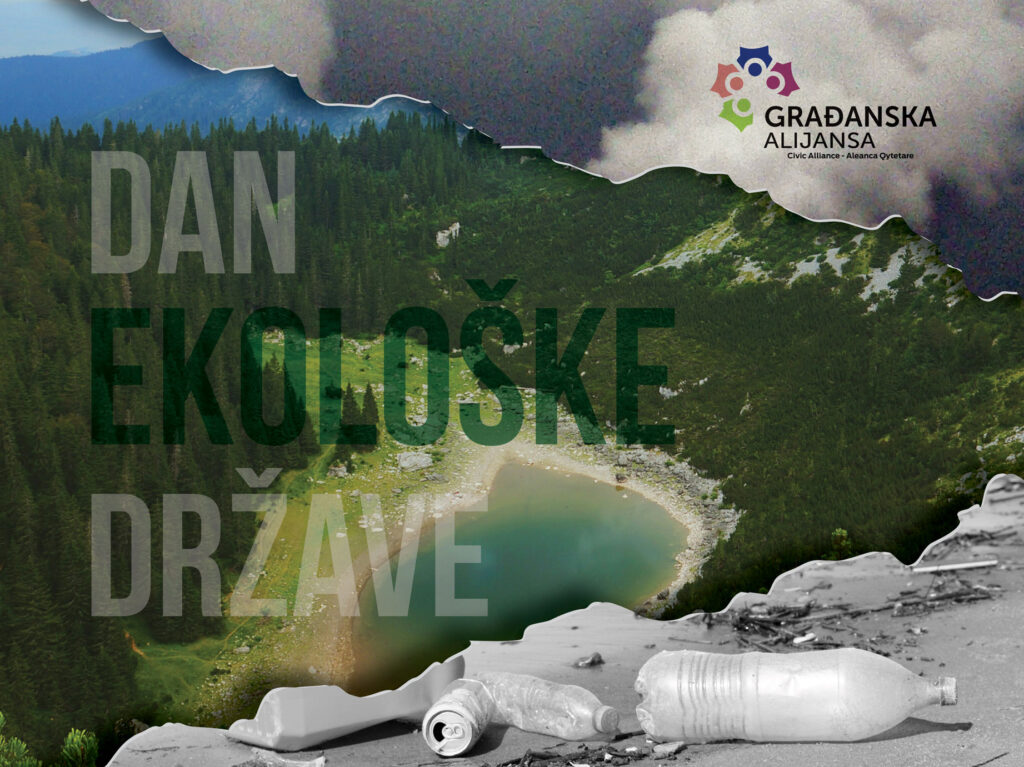
Instead of the image of a green state, Montenegro today, more than 30 years after being declared the world’s first ecological state in Žabljak, presents a picture of over 330 illegal landfills, garbage on the streets, plastic along highways, and riverbeds clogged with waste. Although in 1991 this was a historic act that inspired hope among citizens that the country’s natural resources would be permanently protected, sustainable development has never become a strategic direction of society.
Rather than living the concept of an ecological state, the country has settled for preserving it only in the Constitution and official documents. A lack of investment and commitment has resulted in green policies largely remaining a dead letter on paper.
Plastic recycling barely exceeds 0.5%, despite a target of 30%. Infrastructure for wastewater treatment exists only in fragments.
For decades, citizens have been sending a clear message that nature must not be sacrificed for profit, yet everyday life shows the opposite. While Podgorica is still waiting for a solution to its wastewater treatment plant issue, in many northern municipalities people face polluted water sources and unmanaged landfills. An ecological state cannot be built partially – every community must receive equal attention and support.
An ecological state also implies an energy transition and a shift to renewable energy sources – an obligation Montenegro has not only toward nature and future generations, but also within its European integration process through Chapter 27.