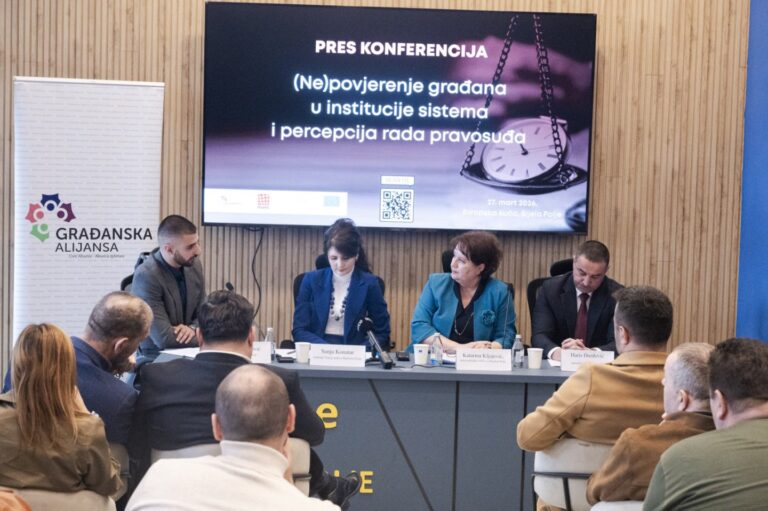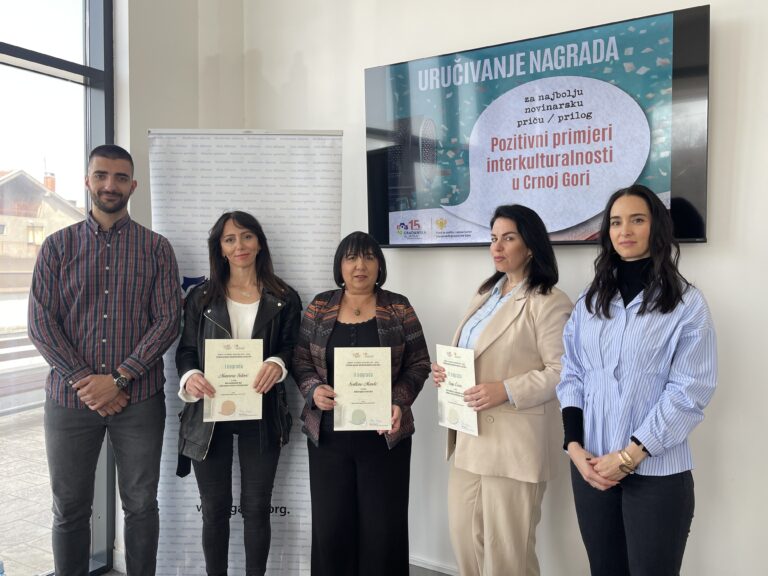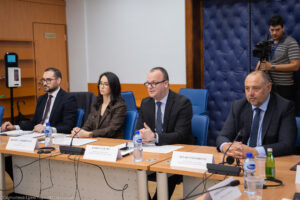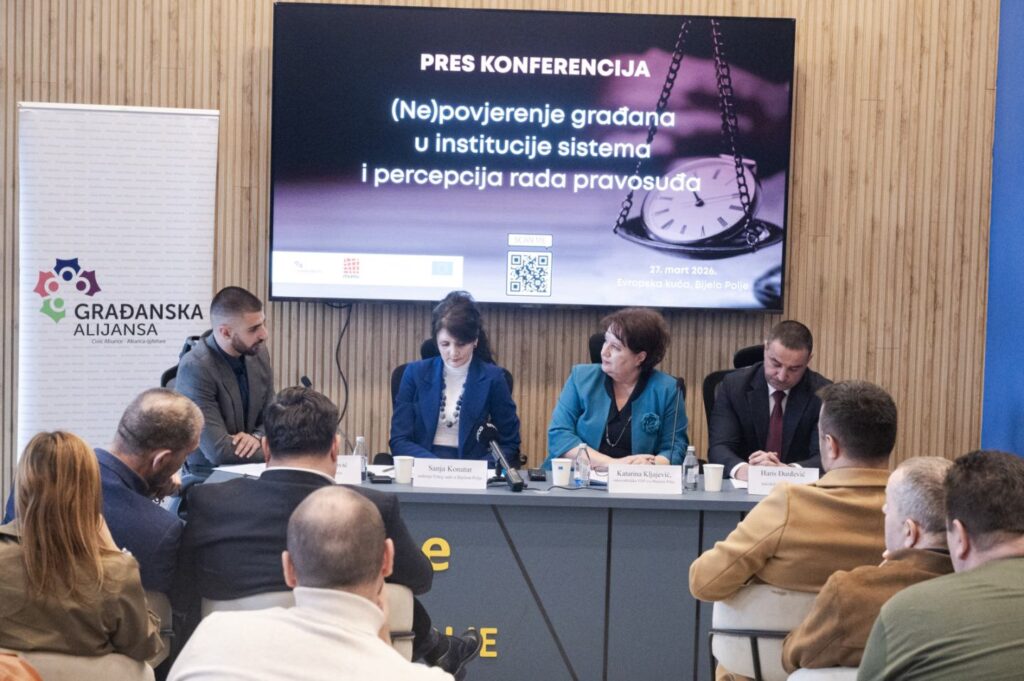
In order to increase citizens’ trust in state institutions, additional efforts should be directed toward improving strategic communication, particularly in crisis situations – an area that has been lacking in the previous period. This was one of the key conclusions of the event “(Dis)Trust of Citizens in Institutions and Perceptions of the Judiciary”, organized today by Civic Alliance at the Europe House in Bijelo Polje.
In the introductory part of the event, Prof. Dr. Miloš Bešić presented the key findings of Civic Alliance’s research titled “Citizens’ Trust in the Work of the Judiciary in Montenegro.”
The results indicate a predominantly negative perception of the efficiency of the judicial system. As many as 67.3% of citizens believe that courts are slow in delivering judgments in cases involving serious criminal offences, while only 11.4% consider them efficient. This reflects a low level of trust in the judiciary’s operational capacity in handling the most serious crimes.
Additionally, the perception of judicial independence remains limited, with only 5% of respondents considering courts and judges to be highly independent, while 25.2% believe they are mostly independent. At the same time, a significant share of respondents (41.6%) are unable to assess this, pointing to a high level of uncertainty and insufficient public awareness.
In a broader institutional context, citizens show greater trust in the police (around 45%) than in judicial institutions (around 34%), confirming a trend of higher trust in institutions that are more directly present in citizens’ daily lives.
A particularly significant segment of the research concerns perceptions of recent prison escapes, with a focus on the case of Miloš Medenica. The data show that 31.1% of citizens do not know who is responsible, while other responses are distributed among the police (21.4%), the judiciary (25.7%), and the system as a whole (15.8%). This clearly indicates unclear and insufficiently communicated lines of institutional responsibility.
At the same time, 60.2% of citizens assess cooperation between judicial institutions and the Police Directorate as poor, while 39.8% consider it very good.
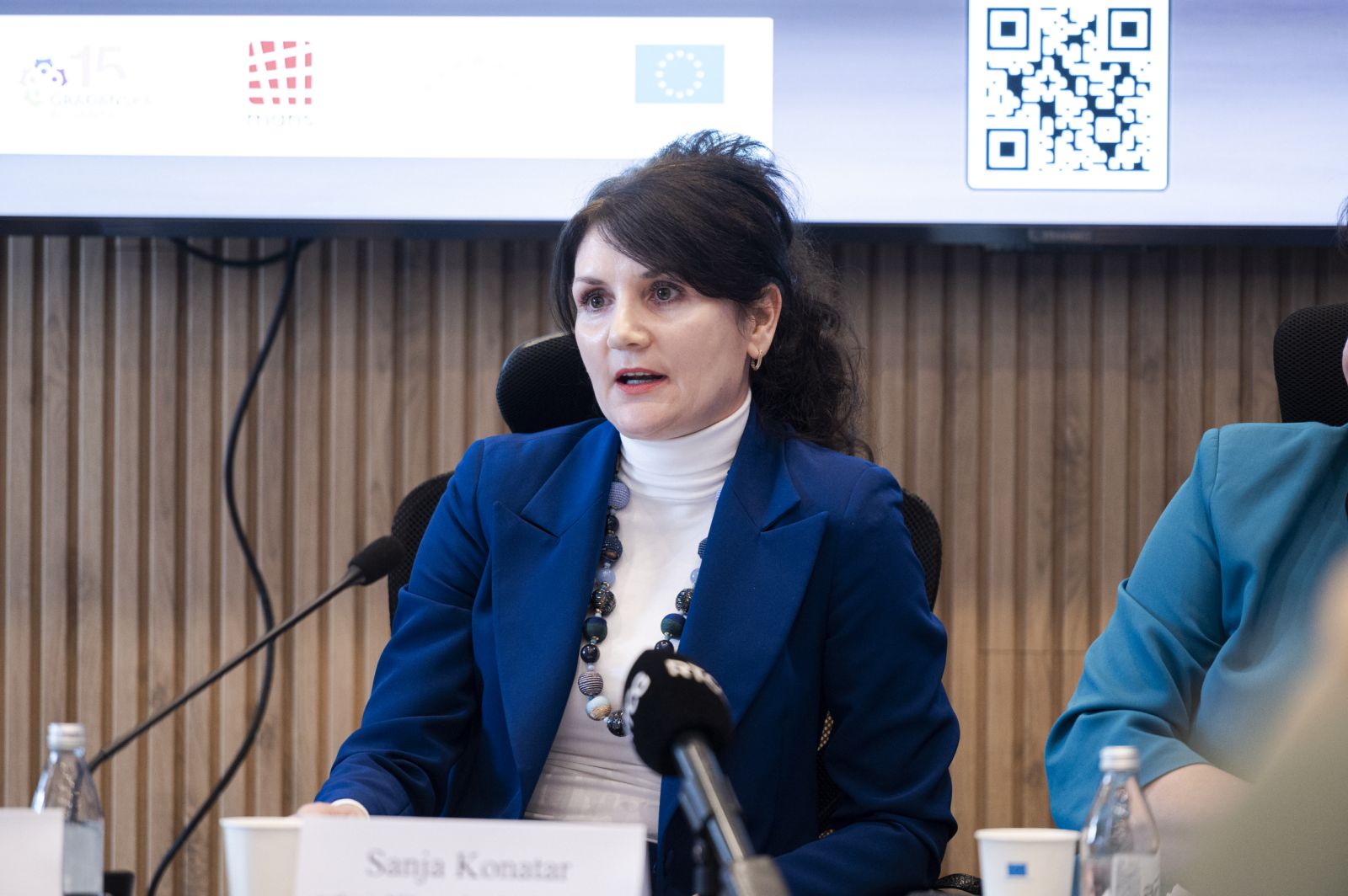
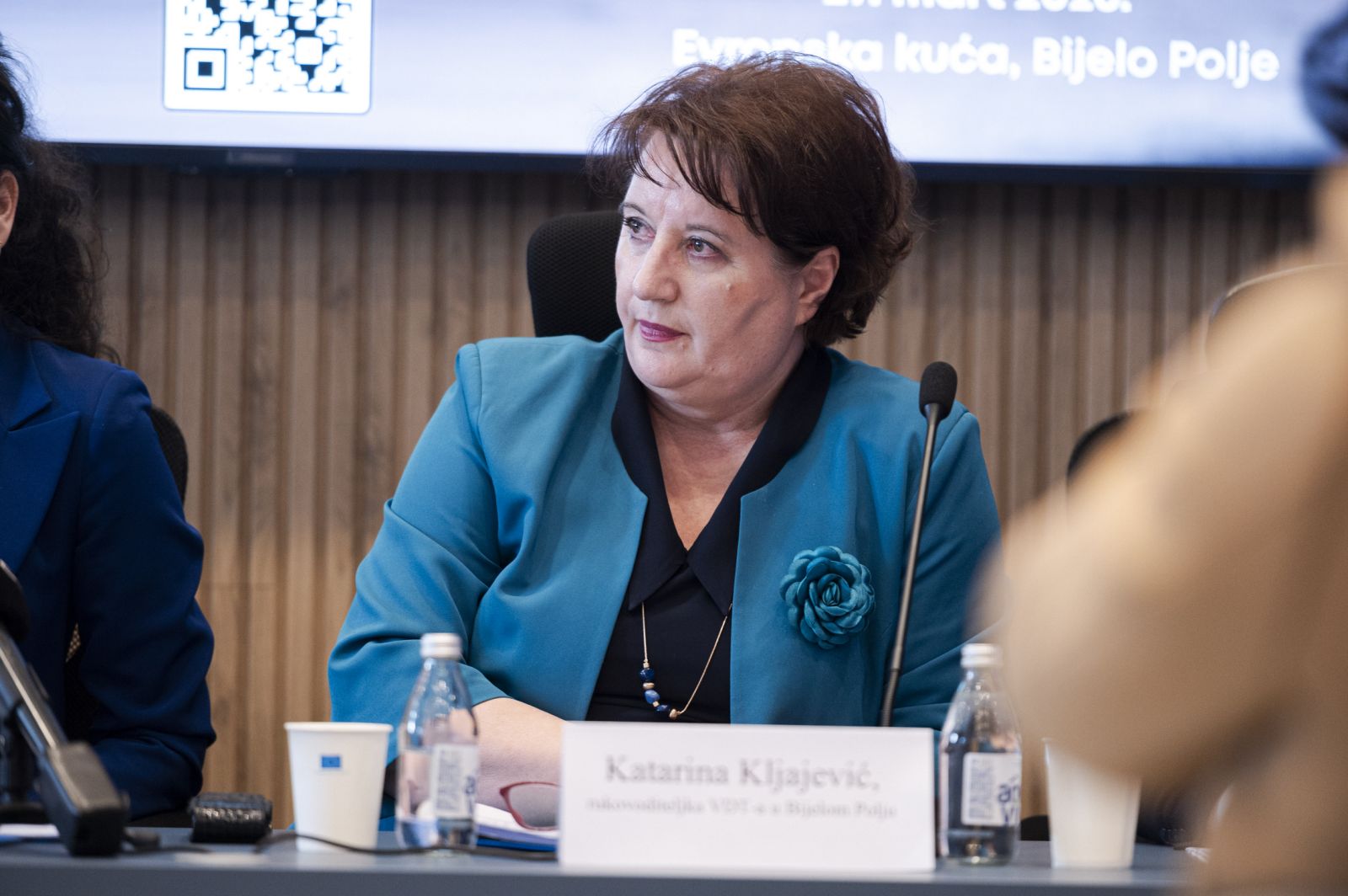
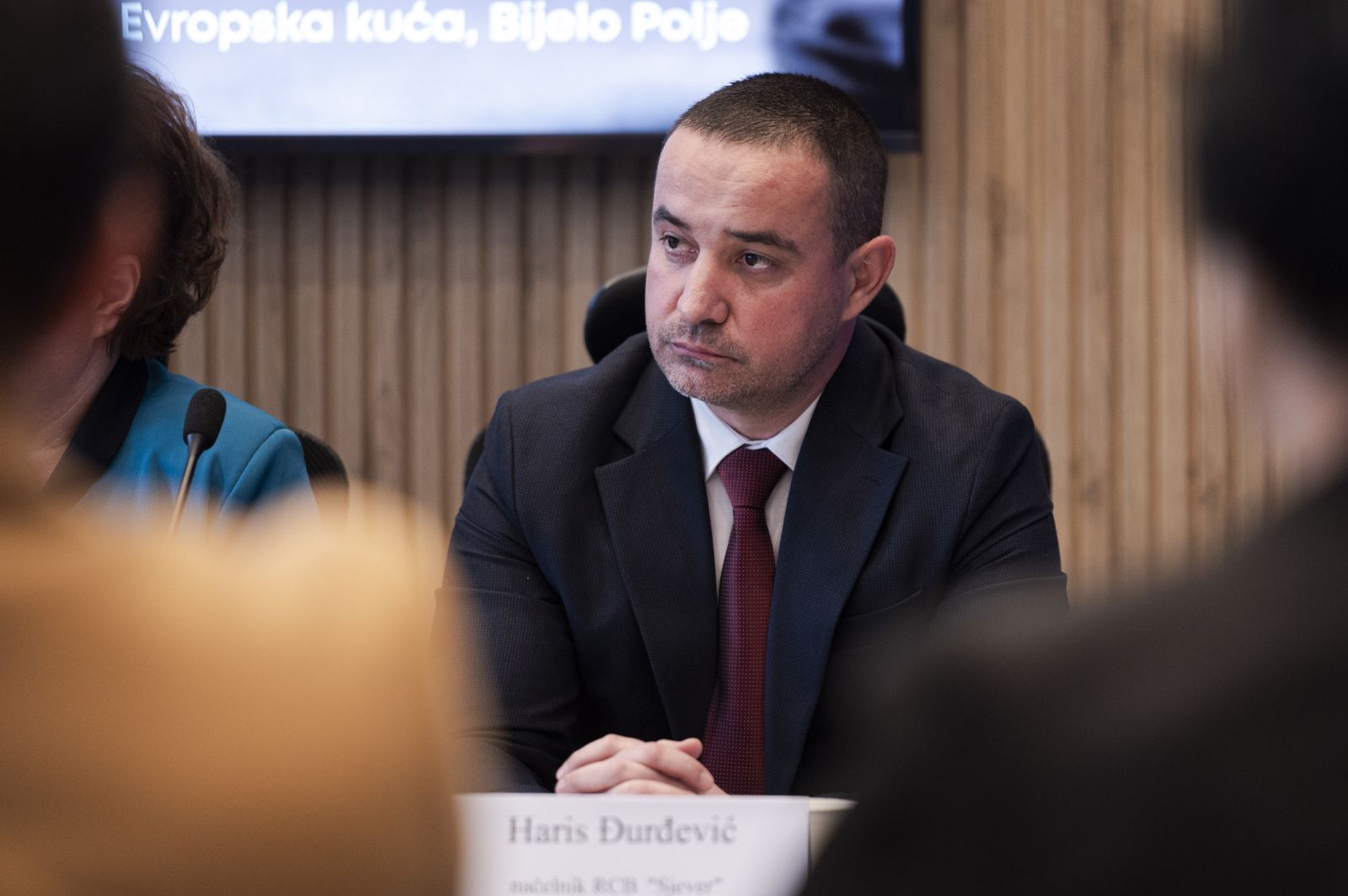
Following the presentation of the research findings, a panel discussion was held featuring Katarina Kljajević, Head of the Higher State Prosecutor’s Office in Bijelo Polje; Sanja Konatar, Judge of the Higher Court in Bijelo Polje; and Haris Đurđević, Head of the Regional Security Centre “North.”
Commenting on findings related to public perceptions of judicial efficiency over the past year – where 20.8% of respondents believe the situation has worsened, 18.7% believe it has improved, 35.5% think it has remained the same, and 25% are unable to assess – Kljajević emphasized that all institutions must work to strengthen public trust. She noted that public perception is closely linked to a sense of fairness and expectations of equal treatment before the law.
She also pointed out that perception depends not only on case outcomes but also on citizens’ awareness of institutional competences, stressing that legality, efficiency, and impartiality are key factors influencing trust.
Regarding specific steps taken by the prosecution to enhance transparency and timely public communication, she referred to the new Communication Strategy and its importance in this context.
Speaking about cooperation, Kljajević highlighted excellent collaboration with the police and the courts, reflected in regular meetings and the exchange of guidelines.
Asked to comment on the findings showing that around 45% of respondents trust the police, Haris Đurđević stated that the Police Directorate continuously monitors public perception through various surveys and maintains ongoing cooperation with relevant international organizations.
He emphasized that public perception largely depends on the visibility of concrete institutional results and expressed confidence that the Police Directorate is doing a good job in communicating with citizens.
Referring to the Balijagić case and the issue of omissions and accountability of police officers, he noted that internal control identified irregularities and unlawful conduct among 10 police officers, leading to the initiation of disciplinary proceedings.
Sanja Konatar addressed the finding that the duration of court proceedings and delays in first-instance judgments affect public trust, emphasizing that perception depends on parties’ experiences and the way media report on such issues.
Speaking about the length of proceedings, she pointed out that courts face a large caseload and a shortage of judges, and that efficiency also depends on other participants in the process. She added that frequent changes of presiding judges or the overturning of judgments further complicate the situation, often leading to repeated proceedings.
Konatar stressed that, in order to reduce the duration of proceedings, there is a clearly defined plan for resolving backlog cases, prioritization of urgent cases, filling judicial vacancies, and implementing digitalization measures.
This event is part of the project “Justice in Numbers: Citizens’ Perceptions and the Work of the Judiciary,” implemented by Civic Alliance with financial support from MANS and Our action, within the project “Empowering Community Voices: Advocating for Justice and Rule of Law,” funded by the European Union through the EU Delegation to Montenegro.