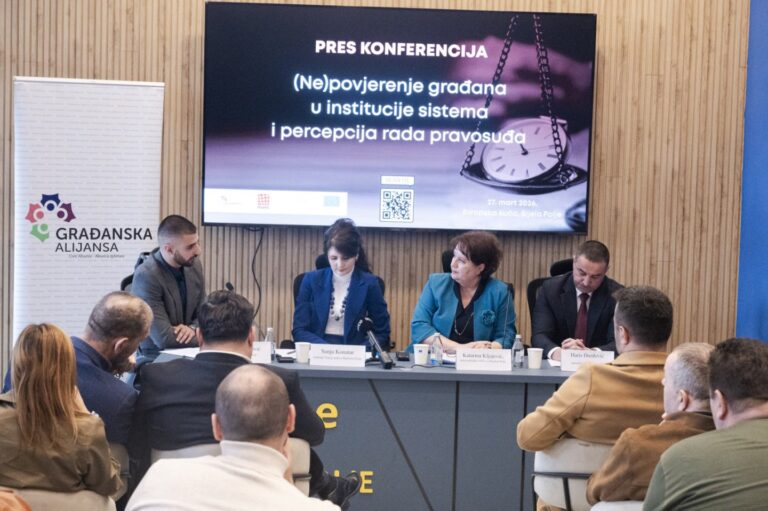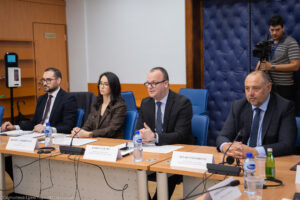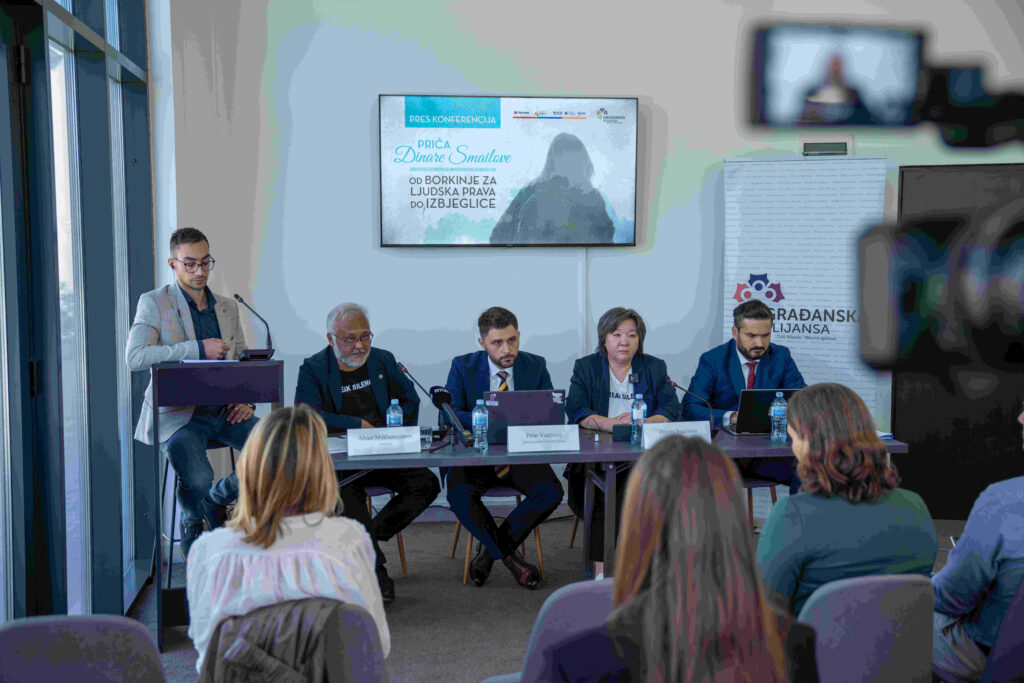
The case of Dinara Smailova serves as a warning to state institutions that in such and similar cases there is no room for misapplication of legal norms or negligent conduct, as such errors can result in serious injustice, and even torture or death. This was the conclusion of today’s press conference titled “The Story of Dinara Smailova – From Human Rights Defender to Refugee”, organized by Civic Alliance at the Civic House.
Dinara Smailova, a Kazakh women’s rights activist, sought asylum in Montenegro for three reasons: health-related reasons, as her doctor recommended living by the sea; Montenegro’s NATO membership; and its status as a candidate for EU membership.
She stated that 18 criminal proceedings have been initiated against her in Kazakhstan, two of which were dismissed due to lack of evidence. The charges stem from her social media posts encouraging women not to remain silent about violence, and from founding the initiative “Public Movement Against Violence #NeMolchiKZ.” Through the work of this initiative, she has supported thousands of women over nine years, contributed to the conviction of 315 perpetrators, and exposed systemic inaction by Kazakh police. More than 200 police officers were subjected to disciplinary measures, while 12 were sentenced to prison for serious criminal offenses.
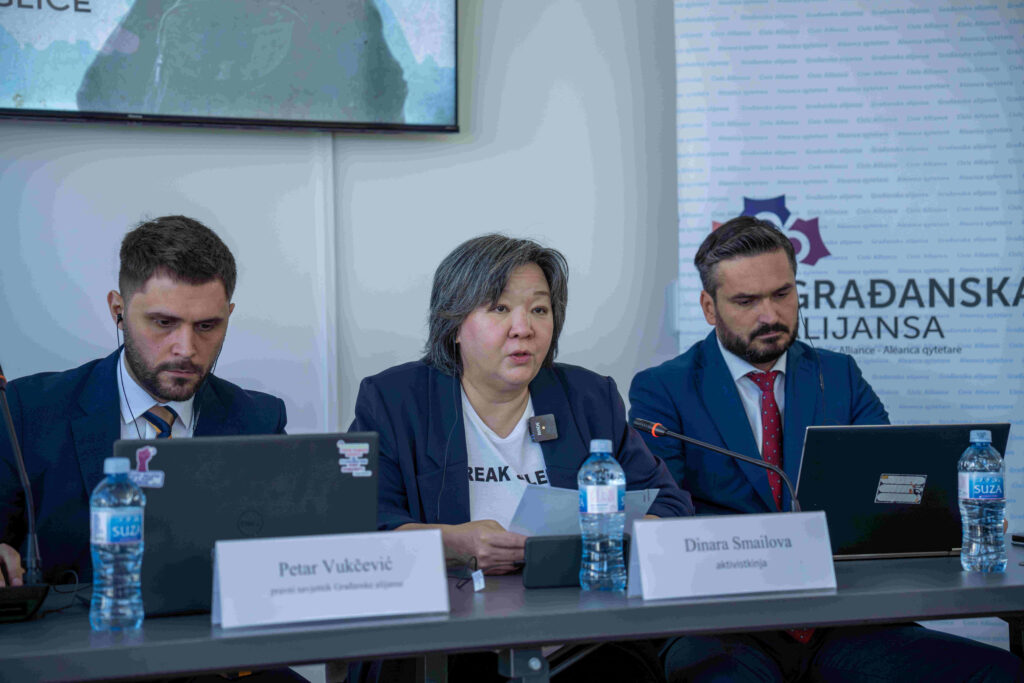
As a result, the Kazakh regime initiated eight politically motivated criminal cases against her, falsely accusing her of fraud and spreading disinformation. Donors to her initiative were subjected to police questioning and intimidation. Authorities also banned her from returning to Georgia, where she had been living in exile, prompting her to seek international protection in Montenegro.
Smailova expressed gratitude for the support of the European Parliament, the organization Human Rights Defenders, UNHCR, and other international organizations, as well as Civic Alliance and the Anti-War Committee of Russia for legal assistance.
Her husband, human rights activist Almat Mukamedzhanov, stated that state institutions in Kazakhstan are corrupt and unprofessional, covering for one another through professional and personal ties, and that their foundation has been targeted since its inception.
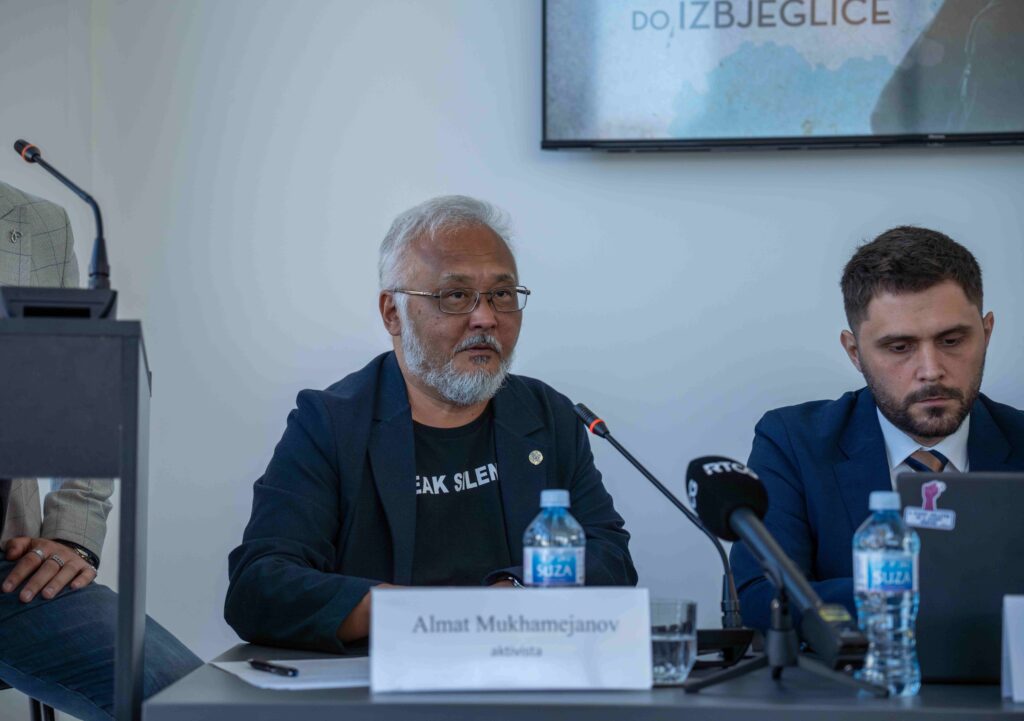
“Dina is not only persecuted by the state, but also by perpetrators, abusers, and those with money and power. A Kazakh court acquitted the murderer of a six-year-old child, which outraged society, yet Dina is being persecuted because the Foundation reported all violations during the investigation,” he said.
He added that this is only one criminal case among hundreds.
Petar Vukčević, legal advisor at Civic Alliance and Smailova’s representative in the asylum procedure, stated that in the organization’s experience of over a thousand cases, this is one of the clearest cases they have handled. He believes that the volume of material and evidence that the Asylum Directorate had to review is the reason why a decision has not yet been issued.
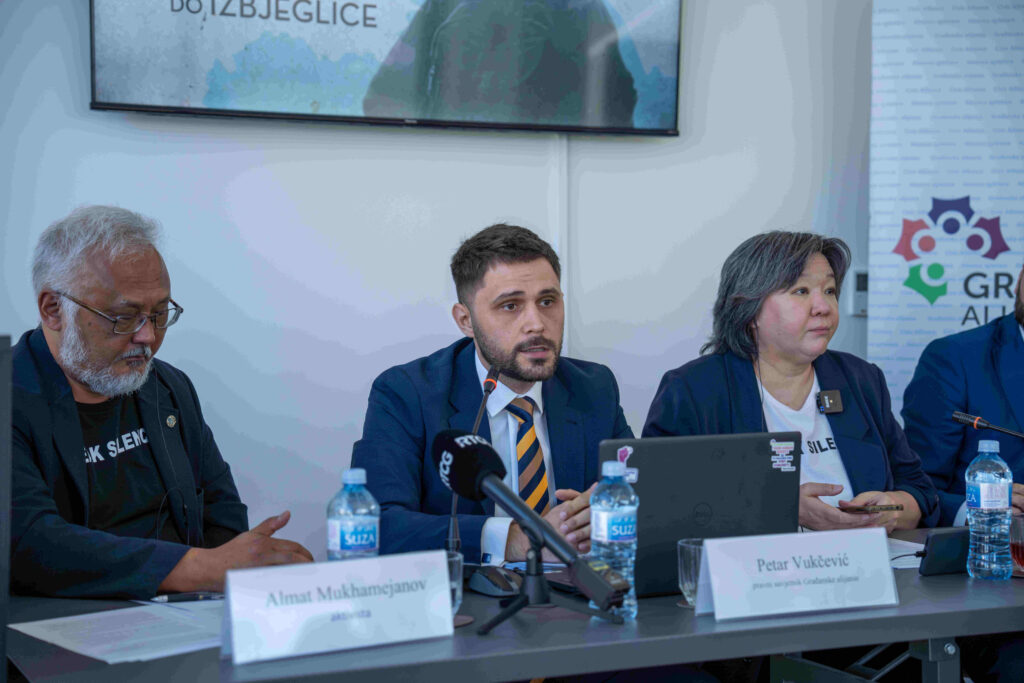
Vukčević also pointed out that the conduct of police officers – who, acting on the prosecutor’s orders, contacted Kazakh authorities and shared information about Ms. Smailova – constituted a violation of several legal principles.
Dalibor Tomović, legal representative in the extradition proceedings initiated by the Republic of Kazakhstan, stated that the extradition request is based on allegations of large-scale theft between June and November 2024 – a period during which Smailova was in Montenegro. Based on this, the request sought her arrest and extradition, which resulted in her arrest on 14 April.
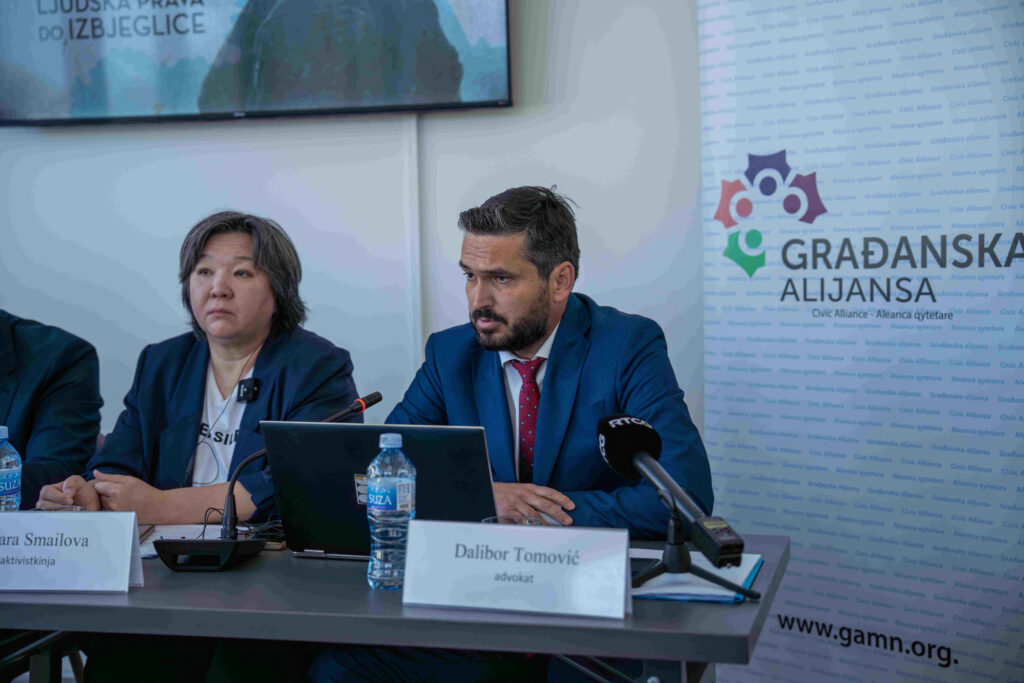
Tomović considers that the imposed measures – confiscation of her passport and mandatory reporting to police authorities – are unnecessary, given that she is already in a procedure for international protection, which requires regular reporting to state authorities.
He added that the continuation of the extradition procedure is expected soon, but also expressed confidence that a positive decision by the Ministry of Interior will be issued, preventing her extradition.
Anara Kusainova, a lawyer representing Smailova in proceedings in Kazakhstan, explained that the criminal case was not initiated based on citizen complaints, but rather on an official police note, while donor statements were obtained under pressure months later.
Out of 7,000 donors, only eight statements were collected, and the total alleged damage amounts to less than 40 euros, which under Kazakh law does not constitute a criminal offense.