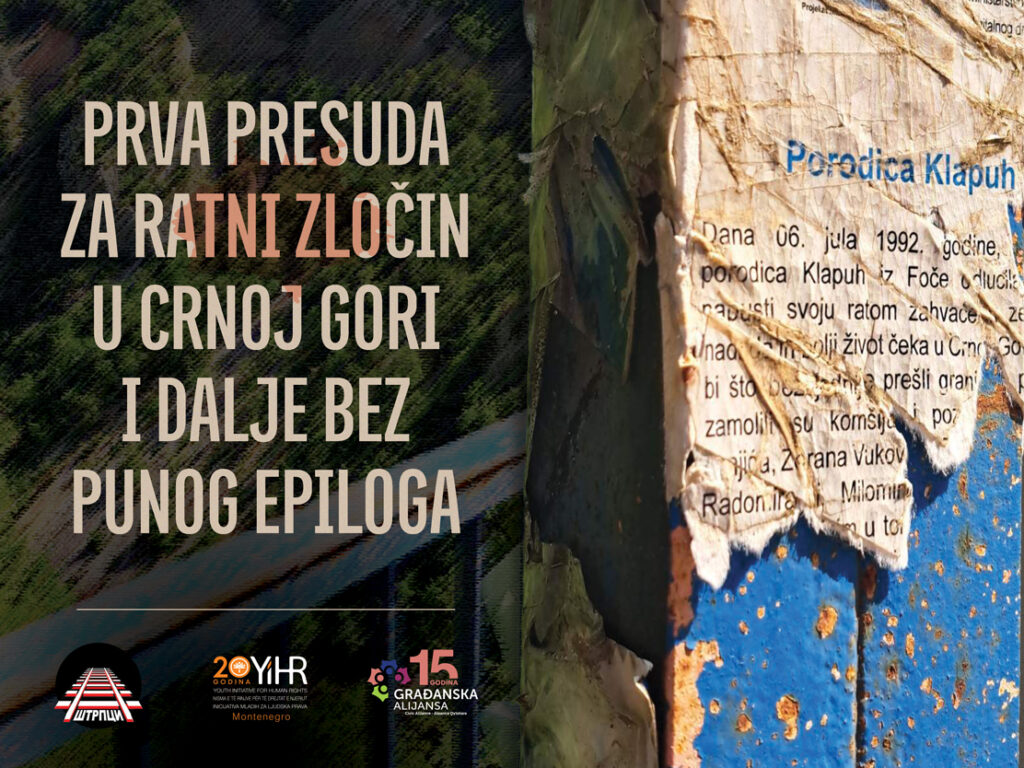
As Montenegro approaches the final stage of its EU accession negotiations, the site where the Klapuh family was murdered, along with other locations where war crimes were committed, remains unmarked and without full legal and societal closure.
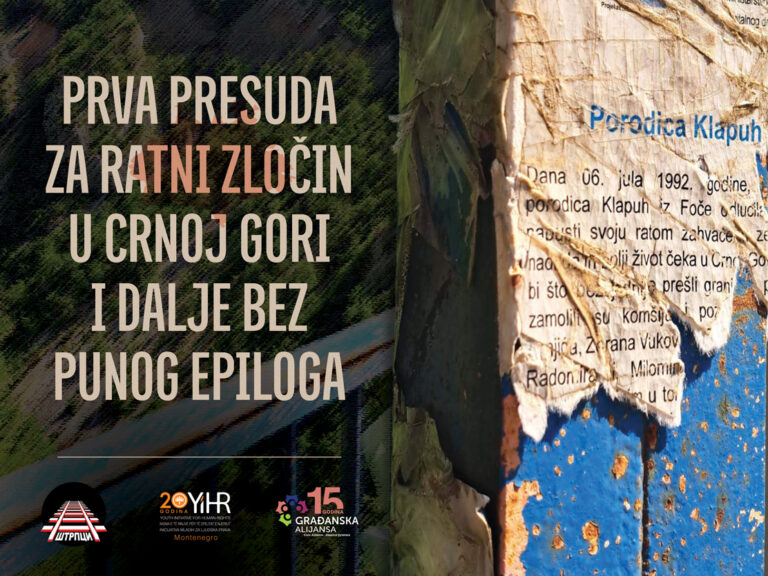
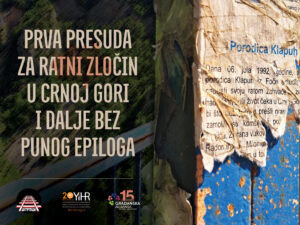
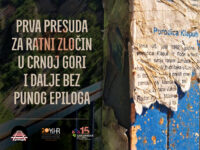
Today marks 34 years since the murder of Hasan, Ferida and Sena Klapuh, a Bosniak family from Foča, who were killed on 6 July 1992 on the Obrad Cicmil Bridge in Plužine by members of the “Dragan Nikolić” Detachment of the Army of Republika Srpska. Although this crime became the first final court conviction for a war crime against the civilian population in Montenegro in 1996, the only person who served a prison sentence was the individual convicted of failing to report the crime and its perpetrators.
Hasan Klapuh, his wife Ferida and their daughter Sena fled Foča in search of refuge in Montenegro. Instead of safety, they met their deaths. After being promised safe passage across the border, members of the “Dragan Nikolić” Detachment took them to the bridge in Plužine, where they murdered them and threw their bodies into the Piva River canyon.
In 1996, the High Court in Podgorica issued a final judgment classifying the case as a war crime against the civilian population. Janko Janjić, Radomir Kovač, Zoran Simović and Zoran Vuković were each sentenced to 20 years’ imprisonment, while their accomplice, Vidoje Golubić, received an eight-month prison sentence for failing to report the crime and its perpetrators. Golubić was the only person who served the sentence imposed.
More than three decades later, progress has finally been made in establishing the fate of the Klapuh family. The Government Commission on Missing Persons announced that DNA analysis had preliminarily confirmed the identities of the mortal remains of Ferida and Sena Klapuh, which were discovered in Nikšić. The search for the remains of Hasan Klapuh is still ongoing.
Although this was the first final war crimes conviction in Montenegro, there is still no memorial at the Obrad Cicmil Bridge commemorating the murdered family. We therefore once again call on the competent institutions to install, in accordance with the law, a memorial plaque at the site of the crime.
The European Commission has consistently pointed out that the prosecution of war crimes, the fight against impunity, respect for the rights of victims, and efforts to determine the fate of missing persons constitute an important part of the benchmarks under Chapter 23, relating to the rule of law and fundamental rights.
The sites where these crimes were committed remain unmarked, while the war crimes of the 1990s are still largely absent from the education system. It is therefore essential that institutions foster a culture of remembrance based on judicially established facts and ensure that the places where civilians lost their lives are commemorated with dignity.