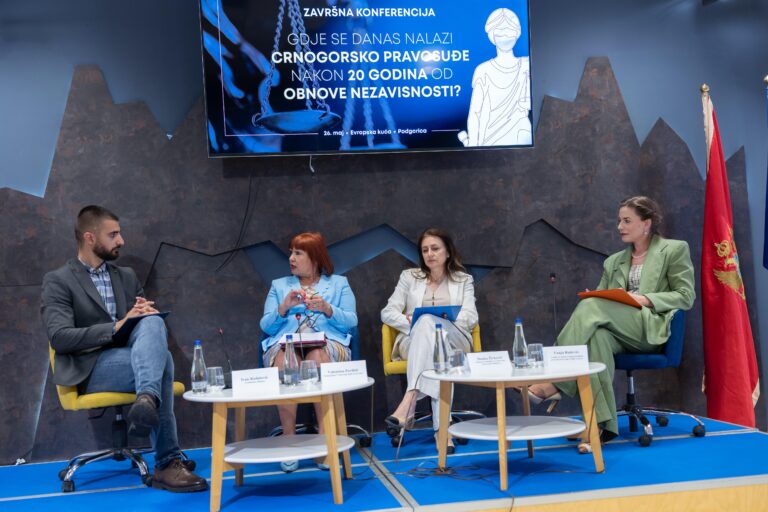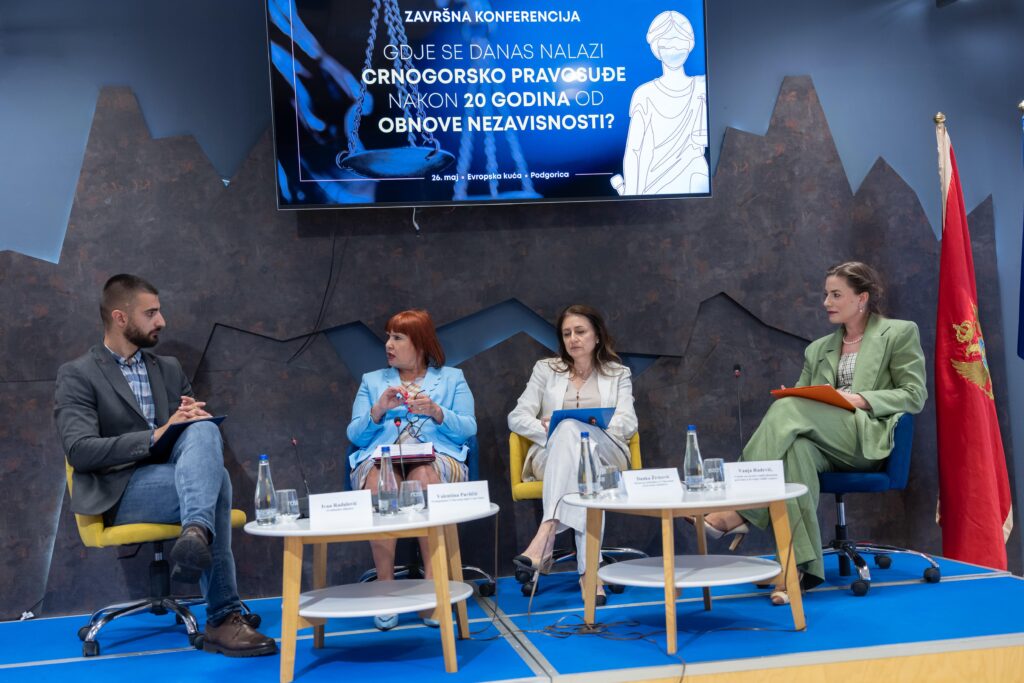
Public trust in the judiciary cannot be restored overnight. It must be built through tangible results delivered by judicial institutions, as well as through their independence, efficiency and resilience to political influence. This was the conclusion of the conference “Where Does Montenegro’s Judiciary Stand Today, 20 Years After the Restoration of Independence?”, organised today in Podgorica by Civic Alliance.
The introductory session featured a presentation of the findings of the survey “Citizens’ Attitudes Towards the Judiciary in Montenegro” by Professor Miloš Bešić. The panel discussion that followed brought together Valentina Pavličić, President of the Supreme Court of Montenegro; Danka Živković, State Prosecutor at the Supreme State Prosecutor’s Office; and Vanja Radević of the AIRE Centre (Advice on Individual Rights in Europe).
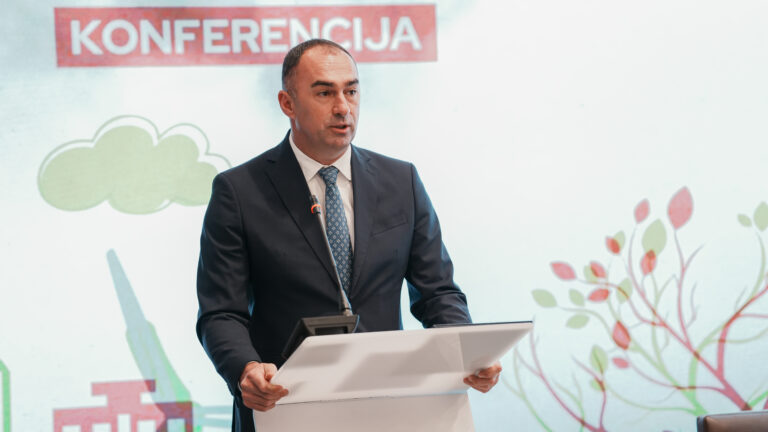
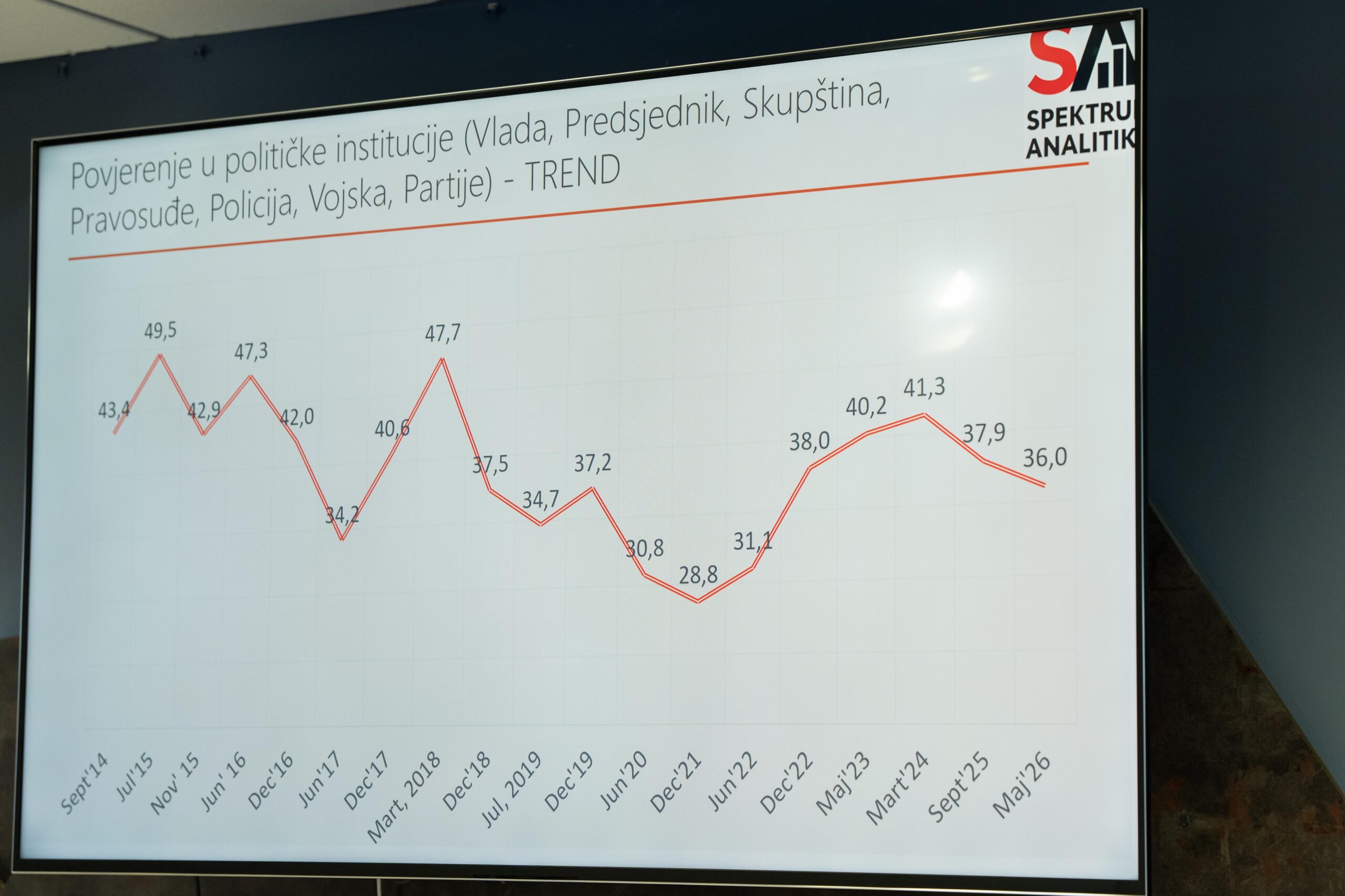
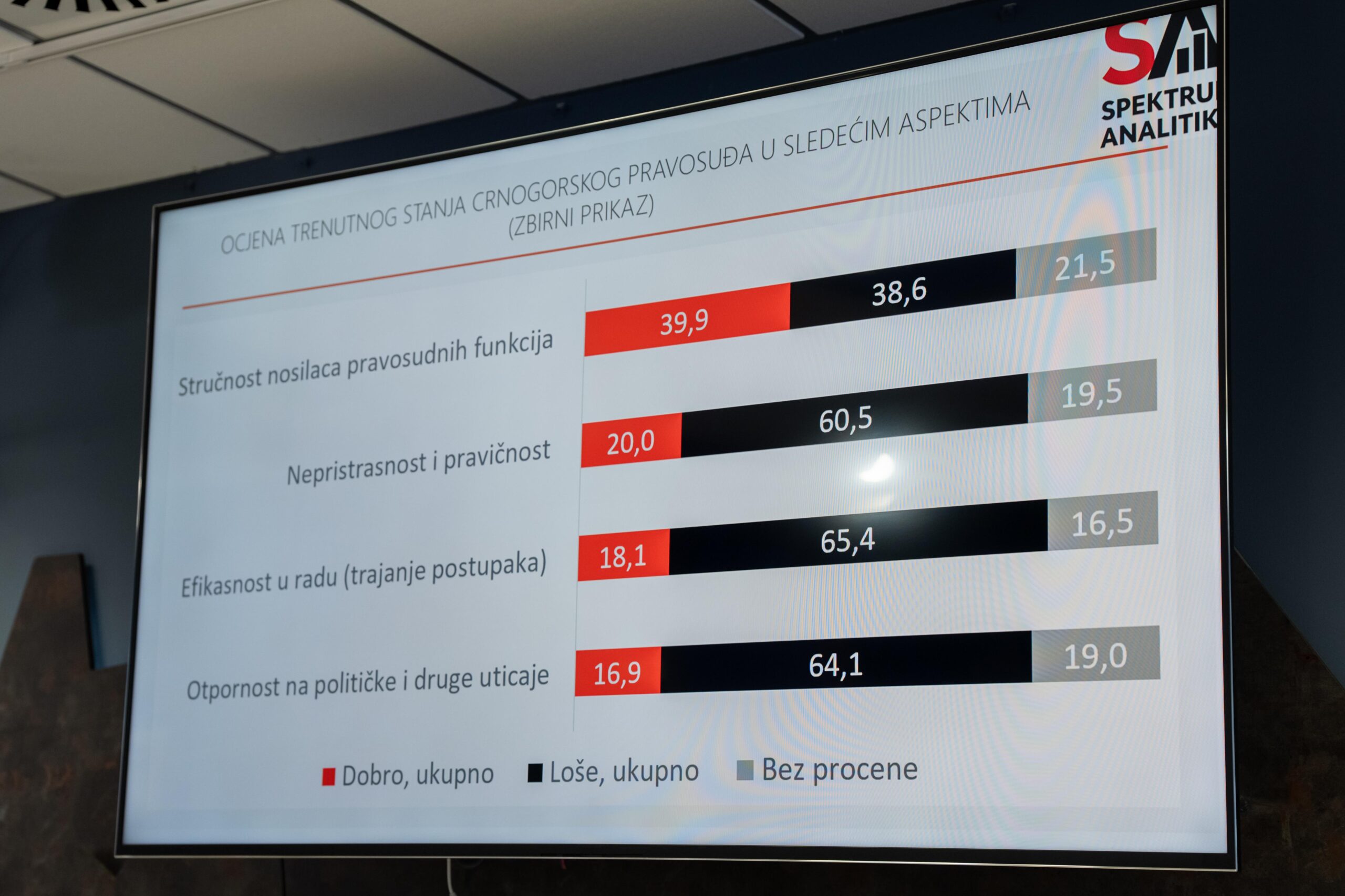
Presenting the survey, Miloš Bešić said its key findings showed that public trust in the judiciary remained relatively low. Citizens identified corruption and political influence as the main problems affecting the judiciary and believed that Montenegro’s judiciary lacked sufficient capacity to combat organised crime and corruption effectively. Nevertheless, the data also showed that progress had been made in the judiciary since Montenegro regained independence.

Commenting on the survey findings, Bešić noted that Montenegro had traditionally recorded low levels of both institutional and interpersonal trust.
Addressing perceptions of political influence and corruption within the judiciary, Bešić said that this narrative represented a strong legacy of the past and that institutions would need years to change it through consistent results and internal accountability mechanisms.
“The most important thing is for institutions themselves to demonstrate their capacity for self-regulation—for the judiciary to identify and address irregularities within the system on its own, because this is precisely how institutional integrity is built,” Bešić said.
Reflecting on the findings of Civic Alliance’s survey, Valentina Pavličić said that public perception did not always necessarily correspond to the actual situation within the judiciary.
“We in the judiciary will not focus on perceptions, but on the actual state of affairs and the tangible results that the judiciary must deliver and demonstrate in practice,” Pavličić said.

She emphasised that the judiciary could not be transformed overnight and that changing institutions and restoring public trust was a long-term process.
Speaking about perceptions of political influence and corruption, Pavličić said that court decisions were often interpreted through the lens of the political climate and divisions within society, although such decisions must be assessed exclusively on the basis of facts, evidence and the law.
Pavličić also warned of the lack of interest among distinguished legal professionals in taking up positions within the judiciary. She noted that there were currently not enough candidates for membership of the Judicial Council or for judicial and prosecutorial positions, which was making reform of the system even more difficult.
She recalled that Montenegro was among the first countries in the region to issue final judgments in organised crime and money-laundering cases, and that several complex criminal proceedings had been concluded within relatively short timeframes.
Danka Živković said that the survey findings should also be viewed in the context of the fact that a significant number of citizens had no direct experience of the judiciary and instead formed their perceptions on the basis of information available in the public sphere and media narratives.
She stressed that judicial institutions needed to do much more to communicate with citizens and present the results of their work.

Speaking about the work of the prosecution service, she explained that the increased caseload was the result of amendments to criminal legislation, as well as a more proactive approach by prosecutors in certain areas, particularly domestic violence and the fight against organised crime and corruption.
Živković noted that the focus was often placed exclusively on negative cases, while a significant number of important cases and achievements by the judiciary remained outside the public spotlight.
“One negative case often outweighs dozens of positive results and sets public perceptions of institutions back several steps,” Živković warned.
Vanja Radević said that citizens’ perceptions of the judiciary must not be disregarded, as they indicated the areas in which reform efforts needed to be focused.

Radević emphasised that transparency was one of the key mechanisms for protecting the integrity of the judiciary. She noted that a more open and communicative judiciary contributed not only to greater public trust, but also to strengthening the resilience of judges and prosecutors to political and other forms of pressure.
“An open judiciary is a strong judiciary. Transparency protects not only citizens, but also judges and institutions themselves,” Radević said.
Speaking about further reforms, she also highlighted the importance of digitalising the judiciary, improving working methods and making court decisions more accessible, describing these as important steps towards a more efficient and transparent judicial system.