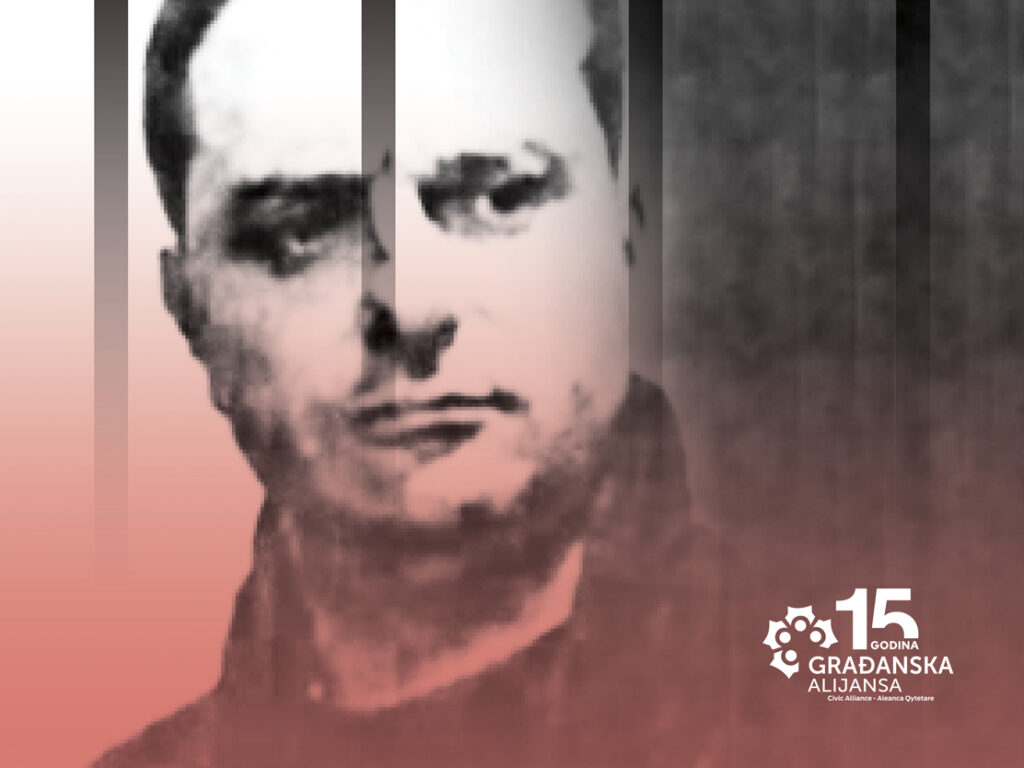
The news that Miloš Medenica was not found at his home address and is currently on the run has once again brought to the forefront questions about the functioning of the system and institutional accountability. Once again, preventive measures are being discussed at a time when the consequences have already occurred, even though, in this specific case, such an outcome should have been prevented through timely and consistent action.
The Civic Alliance notes that this case has attracted significant public attention and required heightened scrutiny and coordination among the competent authorities, including in relation to the supervision of the accused, whose pre-trial detention had been replaced with house arrest. This is particularly important in light of previous experiences, namely failures in cases where individuals subject to a prohibition on leaving their residence went on to commit the most serious criminal offenses.
Institutional maturity, accountability, and a thorough analysis of the actions of the competent authorities – aimed at preventing similar failures in the future – are prerequisites for restoring public trust, as citizens expect the state to guarantee their safety and legal certainty.
However, instead of accountability, attempts are being made to shift blame onto a legal solution that did not receive majority support in the plenary, since, in addition to the opposition, part of the ruling majority also did not vote for it. The civil society sector engaged in human rights is being targeted and indirectly accused of having helped the convicted individual to disappear. It is precisely representatives of civil society who have been warning, advocating for prevention, calling for public dialogue, and putting forward numerous positions and recommendations.
No changes have been made that would enable the system to function effectively. Numerous cases in which a timely reaction was lacking clearly point to those who must provide the public with adequate answers and bear the consequences of their (in)action.
Political demagoguery and party agreements must give way to a professional and responsible approach in each individual case to attempt to restore citizens’ eroded trust in state institutions.